Cooking a Sunday Roast Using Cast Iron in a British Oven
Cooking a Sunday Roast Using Cast Iron in a British Oven: The Complete Guide
There are few meals more deeply woven into British culture than the Sunday roast. Whether you grew up with it at your grandmother’s table in Yorkshire or discovered it after moving to a terraced house in South London, the Sunday roast is a ritual as much as it is a meal. Roast potatoes with crispy edges, a joint of meat rested properly, Yorkshire pudding with a dramatic rise, and vegetables cooked to just the right point — getting all of this right takes practice, good technique, and, crucially, the right cookware.
Cast iron is that cookware. It has been used in British kitchens for centuries, long before non-stick pans and silicone baking trays arrived on the scene. Today, whether you are cooking on an AGA in a Cotswolds farmhouse, a standard electric fan oven in a Manchester flat, or a gas range in a Cardiff semi-detached, cast iron gives you a consistency and reliability that other materials simply cannot match. This guide walks you through everything you need to know to cook a proper Sunday roast using cast iron — from choosing your equipment to plating the meal.
Why Cast Iron Works So Well in a British Oven
British ovens vary enormously. A standard fan-assisted electric oven in a new-build property in Milton Keynes will behave very differently from a Rangemaster in a Kent farmhouse kitchen. Cast iron handles this variation better than most materials because of its exceptional heat retention and even heat distribution.
When you place a cast iron roasting dish in a preheated oven, the pan absorbs and holds heat in a way that thin aluminium or stainless steel simply cannot. This means that when a cold joint of meat hits the surface, the temperature does not drop sharply. The result is a better sear, a more even cook, and far superior browning — exactly what a Sunday roast demands.
Cast iron is also oven-safe to extremely high temperatures. Most cast iron cookware — including popular brands such as Le Creuset and Lodge — can withstand temperatures of at least 260°C (500°F), with uncoated bare cast iron pieces tolerating even higher heat. Given that roast potatoes require temperatures of around 220°C and a chicken or beef joint may need starting at a high temperature before reducing, cast iron covers the full range without issue.
Choosing Between Bare Cast Iron and Enamelled Cast Iron
In the UK, you will encounter two main types of cast iron cookware: bare (or “raw”) cast iron, and enamelled cast iron. Both are excellent for Sunday roasting, but they have different strengths.
Bare cast iron, such as the Lodge 12-inch skillet or the Netherton Foundry pieces made in Shropshire, England, requires seasoning and develops a natural non-stick surface over time. It is ideal for high-heat searing, browning potatoes, and cooking Yorkshire pudding. It is generally more affordable than enamelled alternatives and, with proper care, will last several lifetimes.
Enamelled cast iron, popularised in the UK by Le Creuset (whose casserole dishes are a fixture in British kitchens from Edinburgh to Exeter), does not require seasoning and is easier to clean. It is perfect for braising joints, slow-cooking vegetables, and making gravies directly in the pan after roasting. The enamel coating also means you can cook acidic ingredients such as wine-based gravies without any concern about the flavour being affected.
For a complete Sunday roast, ideally you would have both: a bare cast iron skillet or roasting tray for potatoes and puddings, and an enamelled casserole or braiser for the main joint.
Essential Cast Iron Equipment for a Sunday Roast
- A large cast iron skillet (at least 30cm / 12 inches) for browning the joint before roasting and for Yorkshire pudding
- A cast iron roasting dish or gratin dish for roast potatoes and root vegetables
- An enamelled cast iron casserole (Le Creuset 28cm or 30cm round is a popular UK choice) for slow-roasted joints or braised legs of lamb
- A cast iron skillet or muffin tin alternative — a popover pan or a cast iron Yorkshire pudding tray if you want individual puddings
If budget is a concern, UK retailers such as Lakeland, Dunelm, and Amazon UK stock own-brand and Lodge cast iron pieces at accessible price points. Lodge is imported from the USA but is widely available in the UK and represents outstanding value. Alternatively, look out for vintage cast iron pieces at car boot sales, flea markets, and charity shops — pieces from defunct British manufacturers such as Kenrick & Sons can be found in excellent condition and will outlast any modern purchase with proper seasoning.
Seasoning Your Cast Iron Before the First Use
If you have purchased bare cast iron, you must season it before cooking. This process involves applying a thin layer of oil and baking it onto the surface to create a protective, semi-non-stick layer. Even if your pan claims to come “pre-seasoned,” adding a few extra layers before your first use will significantly improve performance.
How to Season Cast Iron in a British Oven
- Wash the pan thoroughly with warm soapy water and a stiff brush. This is the one time you should use soap on bare cast iron. Rinse and dry it completely — any moisture left will cause rust.
- Preheat your oven to 230°C (fan 210°C, Gas Mark 8).
- Apply a very thin layer of a high smoke-point oil across the entire pan, including the handle and the outside. In the UK, good options include cold-pressed rapeseed oil (widely available and British-produced), refined sunflower oil, or flaxseed oil. Avoid extra virgin olive oil, which has too low a smoke point.
- Wipe away virtually all the oil with a clean cloth — you want a coat so thin the pan looks almost dry. Too much oil will result in a sticky, uneven finish.
- Place the pan upside down on the middle rack of your oven with a piece of foil on the rack below to catch any drips.
- Bake for one hour, then turn the oven off and allow the pan to cool completely inside the oven.
- Repeat this process three to four times before the first cook.
British-produced rapeseed oil is worth highlighting here. Cold-pressed rapeseed oil from producers across Yorkshire, Lincolnshire, and Scotland is an excellent choice for seasoning, and using a domestic product supports British agriculture. However, for seasoning purposes, refined rapeseed oil (rather than cold-pressed) is preferable as it has a higher smoke point.
Planning the Sunday Roast: Order and Timing
A successful Sunday roast requires careful timing. The goal is to have the meat rested, the potatoes crispy, the Yorkshire pudding risen, and the gravy finished all within a few minutes of each other. Cast iron actually makes this easier, because pans hold heat and can be moved between hob and oven without drama.
Below is a realistic timetable for a roast beef dinner for four to six people, assuming a 1.5kg topside joint:
- 3 hours before serving: Remove the beef from the fridge and allow it to come to room temperature. Season generously with salt and freshly ground black pepper.
- 2 hours 30 minutes before serving: Preheat oven to 220°C (fan 200°C, Gas Mark 7). Parboil potatoes.
- 2 hours 15 minutes before serving: Sear the beef in a cast iron skillet on the hob. Transfer to oven.
- 2 hours before serving: Reduce oven to 180°C (fan 160°C, Gas Mark 4). Add potatoes to the cast iron roasting dish in hot fat.
- 45 minutes before serving: Rest the beef, tented loosely in foil, and crank the oven back up to 220°C for the final potato crisping.
- 30 minutes before serving: Cook Yorkshire puddings.
- 15 minutes before serving: Make gravy in the same cast iron skillet used for the beef, deglazing with red wine and stock.
Step-by-Step: Roasting Beef in a Cast Iron Pan
Ingredients (serves 4–6)
- 1.5kg topside of British beef (look for Red Tractor Assured or RSPCA Assured label when purchasing)
- 2 tablespoons cold-pressed rapeseed oil or beef dripping
- Flaked sea salt and freshly cracked black pepper
- 4 cloves of garlic, halved
- A few sprigs of fresh thyme and rosemary
- 1 large onion, quartered
- 1 carrot, roughly chopped
- 500ml good-quality beef stock (low-sodium if possible)
Method
- Take the beef out of the fridge at least one hour before cooking. Pat it completely dry with kitchen paper — surface moisture is the enemy of a good sear.
- Season the beef all over with a generous amount of salt and pepper. Do not be shy here; a large joint needs more seasoning than you might expect.
- Heat your largest cast iron skillet over a high flame on the hob. Add the rapeseed oil or dripping and wait until it just begins to smoke.
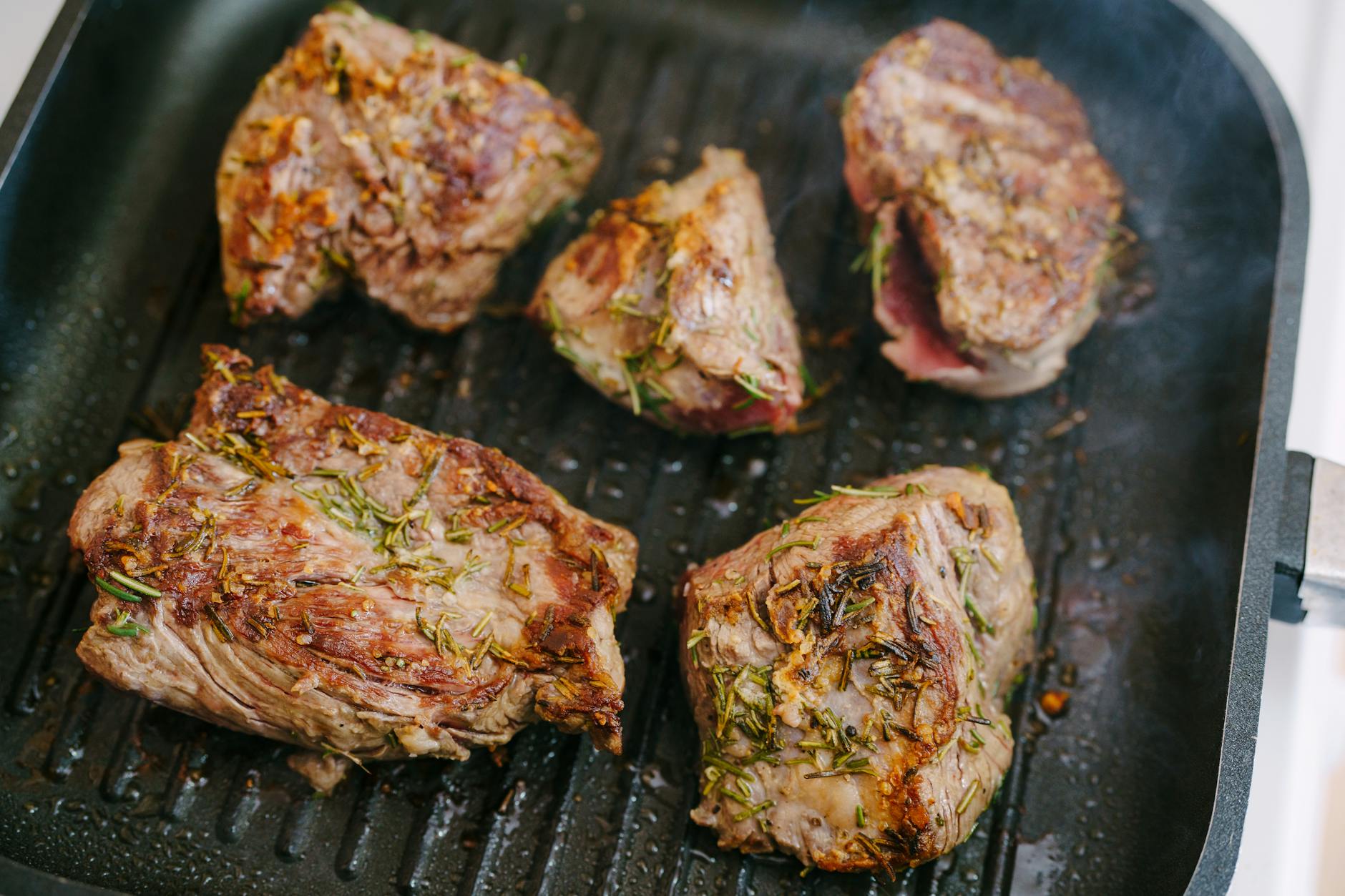
- Place the beef in the pan and sear it on all sides, including the ends, for two to three minutes per side. Do not move it while it is searing — let the crust develop. The cast iron’s heat retention makes it perfect for this stage, as it does not cool down when the cold meat makes contact.
- Transfer the seared joint to a cast iron roasting dish or, if your skillet is oven-safe (which virtually all cast iron is), leave it in the skillet. Place the garlic, herbs, onion, and carrot around the joint. Pour in a splash of stock.
- Roast at 220°C for 20 minutes, then reduce to 180°C and continue roasting. As a general guide, allow 20 minutes per 500g for medium-rare, 25 minutes per 500g for medium. Always use a meat thermometer for accuracy — the Food Standards Agency (FSA) in the UK recommends that beef is cooked to a minimum internal temperature of 60°C for medium doneness, though personal preference varies.
- Remove the joint from the oven when it reaches your desired internal temperature. Place it on a warm board, tent loosely with foil, and rest for at least 20 minutes. A larger joint can rest for 30–40 minutes and will only improve.
Step-by-Step: Perfect Roast Potatoes in Cast Iron
Roast potatoes are the cornerstone of any British Sunday roast, and cast iron produces results that would shame any roasting tin sold in a supermarket. The key is fat, heat, and a surface that stays hot.
Moving Forward
Once you have the fundamentals in place, the possibilities open up considerably. The UK offers fantastic opportunities for anyone interested in this hobby, and with the right foundation you will be well placed to make the most of them.